Ancient Verses, Unexpected Rooms: How English-Language Shayari Is Finding a Home in America's Most Surprising Spaces
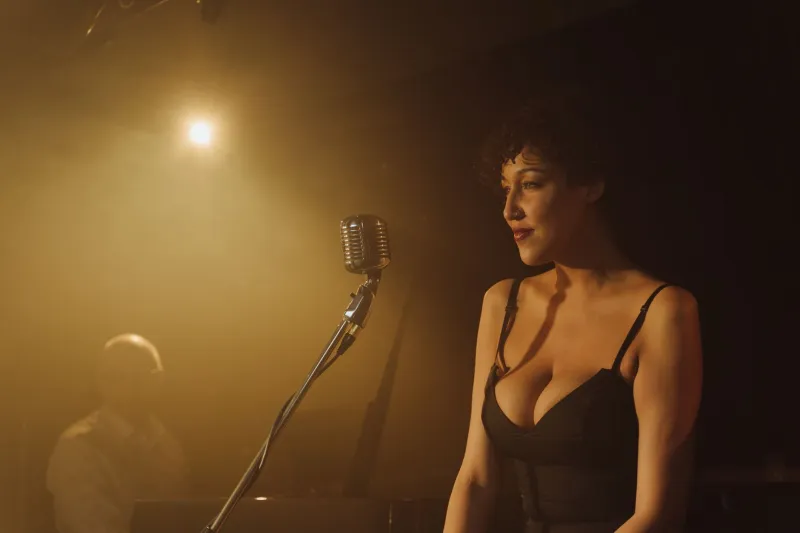
There is a particular kind of silence that falls over a jazz club between sets—a collective exhale, a momentary suspension of the evening's momentum. It is into precisely this silence that Nadia Farouk, a Pakistani-American poet based in Brooklyn, has learned to speak.
"Jazz audiences already understand longing," Farouk explained during a recent conversation. "They know what it means for a note to carry something that cannot be named. When I step into that space with a ghazal, I am not asking them to learn a new language. I am offering them a different instrument for a feeling they already carry."
Farouk performs monthly at a small venue in Bushwick, where her English-language Shayari shares a bill with experimental jazz quartets and the occasional blues guitarist. The pairing, which might have seemed eccentric even five years ago, now draws a standing crowd that is neither exclusively South Asian nor exclusively poetry-literate. It is, by most measures, exactly the kind of audience that the Shayari tradition has rarely encountered on American soil—and exactly the kind of audience that is beginning to transform the form's presence in this country.
The Geography of an Unlikely Expansion
Shayari's migration into unconventional American venues is not a coordinated movement. There is no manifesto, no organizing body, no collective declaration of intent. What exists instead is a series of independent discoveries—poets, venue owners, and community organizers arriving at similar conclusions through entirely different paths.
In Austin, Texas, an independent bookstore called Margin Notes has hosted a monthly Shayari evening for the past two years. The event began, according to owner Clara Ibáñez, as a favor to a regular customer who needed a space for a small gathering. "She brought maybe twelve people that first night," Ibáñez recalled. "By the third month, we were turning people away at the door."
The Austin series has since expanded to include an open-mic component, drawing poets who range from seasoned practitioners of the ghazal form to first-time performers who encountered Shayari through social media and wanted to try their hand at the couplet's particular demands. The bookstore's physical environment—its walls of carefully arranged spines, its atmosphere of accumulated thought—lends the evenings a quality that larger, purpose-built venues rarely achieve.
"There is something about being surrounded by books when you hear a ghazal," said Tariq Mehmood, one of the series' regular performers. "It feels like the form is being returned to its proper company."
When the Venue Becomes a Co-Author
What distinguishes these emerging performance contexts from traditional poetry readings is the degree to which the surrounding environment actively shapes the work being presented. Shayari, with its formal insistence on the radif and qafia—the refrain and rhyme scheme that give the ghazal its hypnotic repetition—proves remarkably responsive to acoustic and atmospheric conditions.
In a jazz club, the form's musical undercurrents become audible in ways they rarely are in a conventional reading room. The ghazal's structure, which moves through a series of self-contained couplets before arriving at the poet's signature in the final sher, mirrors the jazz musician's practice of stating a theme, elaborating through variation, and returning to resolution. Audiences who have spent years listening to Coltrane or Miles Davis recognize the logic intuitively, even when encountering the poetic form for the first time.
Community centers across the South Asian diaspora have long hosted Mushaira events—traditional poetry gatherings rooted in the Urdu literary tradition—but a newer generation of organizers is deliberately choosing venues that sit outside this established circuit. A Bangladeshi-American cultural collective in Chicago recently partnered with a craft brewery in Logan Square to host what they billed as an "evening of verse and fermentation." The description was partly tongue-in-cheek, but the underlying logic was serious: by placing Shayari in a space associated with casual sociability rather than formal cultural programming, the organizers hoped to lower the threshold for unfamiliar audiences.
"We did not want people to feel like they needed credentials to walk through the door," said Priya Chowdhury, one of the event's organizers. "Shayari is not an artifact behind glass. It is a living practice, and living practices belong in living spaces."
The Form Holds
One of the more striking observations made by poets performing in these unconventional settings is how consistently the ghazal's formal structure maintains its integrity across radically different contexts. The couplet, it turns out, is a remarkably durable unit. It can absorb a room's noise, its competing energies, its ambient skepticism, and still deliver its emotional payload with precision.
This durability is not accidental. The ghazal was, historically, a form designed for public performance—for the Mushaira, where poets competed for the approval of educated audiences who knew the rules well enough to recognize when they were being brilliantly broken. The form carries within it a kind of structural confidence, an assumption that it will be heard in conditions that are not perfectly controlled.
Farouk, who has performed in everything from intimate house salons to a converted warehouse in Red Hook, speaks about this quality with evident affection. "The ghazal does not need perfect conditions," she said. "It needs a human ear. Wherever you find one, the form will do the rest."
New Ears, Inherited Depths
The audiences gathering in these unexpected rooms are, by many accounts, arriving at Shayari without the cultural inheritance that has historically served as the form's primary mode of transmission. They have not grown up hearing their grandparents recite Ghalib or Faiz. They have not absorbed the tradition through language, through family, through the accumulated texture of a particular cultural upbringing.
And yet something is clearly reaching them.
Ibáñez, who describes herself as having no prior knowledge of Shayari before opening her bookstore's doors to it, has spent two years observing audiences encounter the form for the first time. "What I see, consistently, is recognition," she said. "Not familiarity with the tradition, but recognition of the feeling. People hear a couplet and they do not think, 'I have never heard this before.' They think, 'Someone finally said it.'"
This is, perhaps, the most compelling argument for Shayari's expansion into unconventional American spaces: not that the form needs new audiences to survive, but that new audiences need the form to articulate something they have been carrying without adequate language.
The jazz club, the indie bookstore, the brewery taproom—these are not dilutions of a sacred tradition. They are, in their own way, the latest iteration of the Mushaira: a gathering of human beings in a room, waiting for a poet to say the thing that silence has been holding.
The ghazal, as it always has, obliges.