The Language Inheritance: How Second-Generation South Asian Americans Are Claiming a Poetic Tradition Across a Generational Silence
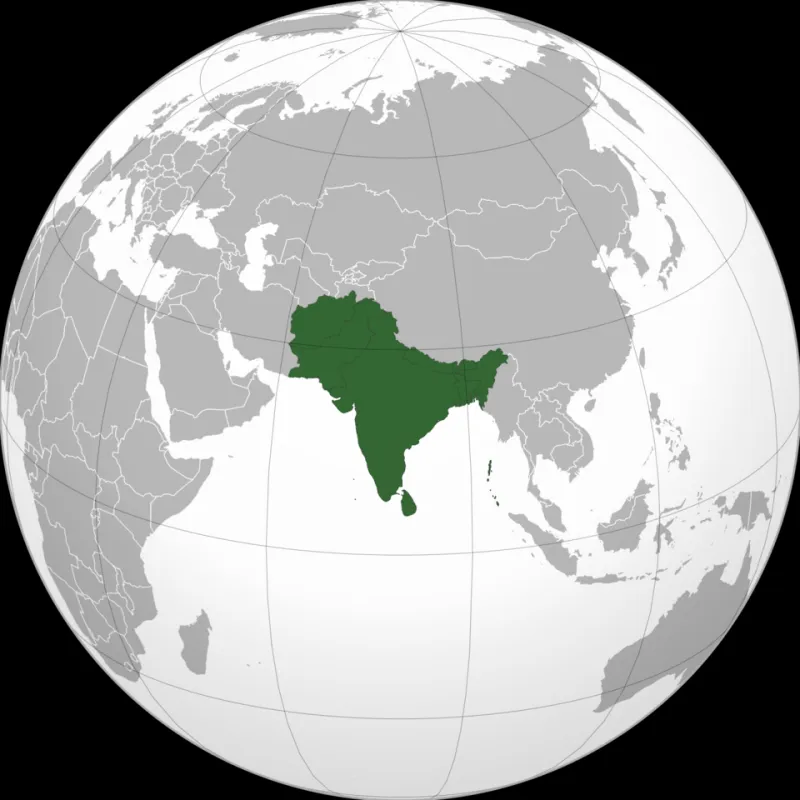
Photo: DrQuantum, CC BY-SA 3.0, via Wikimedia Commons
My mother used to recite half a couplet when she was happy. Just half — the first line, trailing off into a kind of private smile, as though the second line belonged to a world she had left behind and could not quite retrieve. I grew up hearing that incomplete verse the way you hear a song through a wall: certain of its beauty, uncertain of its meaning, unable to ask the right question.
This is the inheritance that many second and third-generation South Asian Americans describe when they speak of Shayari. Not a tradition fully transmitted, but one sensed — felt in the emotional register of a parent's silence, glimpsed in the books that lined shelves no one read aloud from, carried in the untranslated grief of people who crossed an ocean and left certain languages on the other shore.
What Gets Lost in the Crossing
Immigration is always, in part, a linguistic negotiation. The first generation arrives with a mother tongue and acquires English as a tool of survival and assimilation. The second generation grows up bilingual in theory and often English-dominant in practice — fluent in the language of school and work and friendship, but reaching for Urdu or Hindi or Bengali in moments of deep feeling and finding the vocabulary incomplete, the grammar uncertain, the poems half-remembered.
Shayari is particularly vulnerable to this truncation. Unlike everyday conversational language, which can be approximated and improvised, the classical Urdu poetic tradition requires a specific literary register — one that even many native Urdu speakers no longer access fluently. The form carries centuries of accumulated allusion, philosophical reference, and emotional convention. To inherit it properly requires immersion that immigration, by its nature, interrupts.
And yet something persists. Something crosses.
"My father never taught me Urdu formally," writes Nadia Qureshi, a 31-year-old essayist from Houston whose work has appeared in several literary journals focused on diaspora experience. "But he would recite Ghalib when he was melancholy. I didn't understand the words. I understood everything else — the cadence, the way his shoulders changed, the particular quality of attention he gave to those sounds. That was my first Shayari education. It was entirely nonverbal and entirely complete."
Reclamation as Practice
What is new — and what distinguishes the current moment from earlier generations of diaspora cultural navigation — is the deliberateness of the reclamation. Young South Asian Americans are not simply absorbing Shayari passively through family exposure. They are seeking it out, studying it, writing it, and building communities around it with an intentionality that feels less like nostalgia and more like an informed cultural decision.
This distinction matters. Nostalgia looks backward and mourns. Reclamation looks backward and builds forward. The poets and writers engaged in this work are not attempting to reconstruct the cultural world their grandparents inhabited. They are asking what this tradition can become when it passes through an American consciousness, an English tongue, and a set of experiences that the classical masters could not have imagined.
Rahul Sharma, a 28-year-old from the Bay Area who runs a monthly Shayari workshop for South Asian Americans, describes the process in terms that are simultaneously personal and political. "When I started learning the ghazal form, I wasn't just learning a poetic structure," he explains. "I was learning a way of organizing feeling that my family had been doing for generations. It was like being handed a key to a house I had always lived near but never entered."
The house metaphor recurs frequently in conversations with diaspora Shayari practitioners. There is a persistent sense of proximity without access — of a heritage that was always present but never quite available, hovering at the edge of comprehension like a word on the tip of the tongue.
The English Bridge
For many second-generation writers, the decision to engage with Shayari through English rather than Urdu is not a compromise. It is a creative and philosophical position.
Writing Shayari in English acknowledges the reality of a diasporic identity that is genuinely bicultural — not Indian or Pakistani or Bangladeshi, not purely American, but something that exists in the productive tension between those inheritances. To write a ghazal in English is to insist that the emotional and formal tradition of Shayari belongs to its practitioners wherever they are, in whatever language they inhabit most fully.
This is also, for many writers, an act of communication across the generational divide that immigration created. Several diaspora poets describe sharing their English Shayari with parents who read it with a recognition that surprised them — not because the poems reproduced the classical tradition, but because they transmitted something essential from it. The emotional logic survived the linguistic translation.
"I wrote a ghazal in English about the feeling of being between cultures," recalls Sana Ali, a 26-year-old poet from New Jersey. "I showed it to my mother expecting her to be confused by the form or dismissive of the English. Instead she cried. She said, 'This is exactly what I felt when I first came here, and I never had the words for it in any language.' That was the moment I understood what Shayari is actually for."
Communities of Intergenerational Healing
Beyond individual practice, Shayari communities in the United States are becoming spaces where the emotional residue of the immigrant experience — its grief, its dislocation, its particular form of love — can be processed collectively.
Workshops, open mics, and online communities dedicated to English-language Shayari draw participants across generations and levels of cultural knowledge. First-generation immigrants bring the classical tradition; their children bring the English language and the American experience; together they produce something that neither could create alone.
The healing that occurs in these spaces is not incidental to the poetry. It is the poetry's purpose. Shayari has always been, at its deepest level, a tradition for giving form to what resists ordinary expression — for finding language adequate to the feelings that language usually fails. For a community carrying the complex emotional weight of immigration, cultural discontinuity, and identity negotiation, this function is not a luxury. It is a necessity.
At Best English Shayari, we understand the English language as a living vessel for this tradition — one capacious enough to hold the full inheritance of Shayari without diminishing it. What the South Asian diaspora is demonstrating, with increasing clarity and beauty, is that the mother tongue you never spoke can still, in the right hands and the right form, speak you into being.