The Language That Was Never Yours to Lose: Writing Shayari in English When Urdu Is the Tongue You Inherited

My grandmother recited Ghalib from memory. She had never formally studied Urdu poetry — had never sat in a classroom with a text and an instructor — but she carried sher the way some people carry prayers: instinctively, in moments of feeling too large for ordinary speech. When something moved her, she reached for a couplet. When something broke her, she reached for a different one.
I cannot do this. I know perhaps a dozen sher in Urdu, learned phonetically, understood imperfectly. My grandmother's language — the one in which she felt, the one in which Ghalib felt — sits in my mouth like borrowed furniture. I can arrange it carefully, but I cannot make it my own.
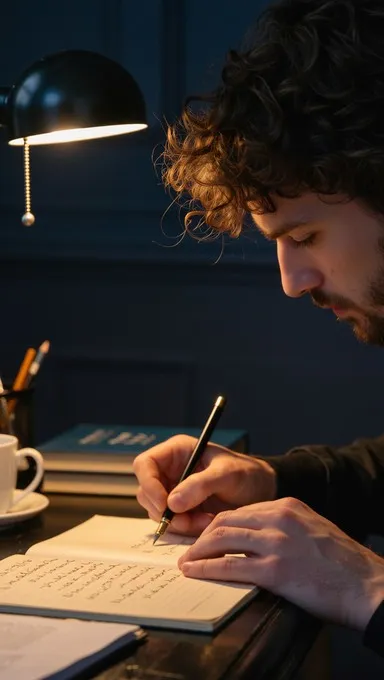
So I write Shayari in English. And I have spent years trying to decide whether this is a loss I am mourning, a necessity I am accepting, or a choice I am, finally, learning to defend.
The Inheritance That Skipped a Generation
The experience I am describing is not unique, and it is not simple. Across the South Asian diaspora in the United States — among poets who grew up in New Jersey and Texas and California, who attended American schools and read American literature and dreamed in English — there is a particular grief attached to the question of language. Not the grief of having lost something you once possessed, but the more complicated grief of inheriting something that was never fully transferred.
Urdu, for many second-generation South Asian Americans, exists at a specific remove. It is the language of grandparents, sometimes of parents. It is the language of old films watched with subtitles, of wedding songs whose words are felt before they are understood, of prayers whose meaning is approximate. It is present enough to be recognizable and absent enough to be inaccessible.
Shayari — the poetic tradition that is among Urdu's greatest achievements — sits at the center of this grief. Because Shayari is not merely a literary form. It is, for many South Asian families, the primary vehicle through which emotional life has been expressed and transmitted across generations. To be separated from it by language is to be separated from something more than literature.
"I grew up hearing my father quote Faiz at the dinner table," says Zara Hussain, a poet based in the Boston area who writes English Shayari and teaches creative writing at the community college level. "I understood the emotion of it. I understood that something important was being said. But I couldn't access the words. When I started writing my own sher in English, my father's reaction was complicated. He was proud, but he was also — I think — a little sad. Like I had found a way into the house but through the wrong door."
The Colonizer's Language as the Only Available Tool
The political dimension of writing Shayari in English is one that practitioners in this space cannot avoid, even when they would prefer to. English is, among other things, the language of colonial power in South Asia — the language imposed through a project of cultural and political domination that actively devalued the literary traditions it displaced. To write Shayari in English is, on one reading, to complete a colonial project that classical poets resisted: to take an art form that flourished in Urdu and Persian and render it in the language of the empire.
This reading is not wrong, exactly. But it is incomplete.
"The framing of 'the colonizer's language' assumes that I had a choice," says Imran Siddiqui, a Philadelphia-based poet whose English ghazals have been published in several literary journals. "My Urdu is conversational at best. My Punjabi is better, but it's not the language in which I think about complex feeling. English is. That's not a political position I adopted. It's the cognitive reality of having grown up here. The question isn't whether I should write in Urdu instead. The question is whether the Shayari I make in English has integrity."
This distinction — between what is politically desirable and what is cognitively real — is one that diaspora poets return to repeatedly. The guilt is genuine, but so is the recognition that guilt does not change the architecture of the mind. You write in the language in which you feel. For the second-generation South Asian American, that language is English, inflected by everything the family brought from elsewhere.
Authenticity and Its Discontents
The question of authenticity haunts English Shayari in ways that practitioners find both inevitable and, increasingly, worth interrogating. Who decides what constitutes authentic Shayari? The classical tradition? The community of Urdu speakers? The academy? The poets themselves?
"There's a gatekeeping that happens," says Nadia Rahman, a New York-based poet who writes in both English and her family's Bengali. "People who are fluent in Urdu sometimes treat English Shayari as a lesser thing — sincere, maybe, but not the real article. And I understand where that comes from. The tradition is deep and specific and it has been protected across centuries. But I also think that tradition has always been adaptive. Ghalib was not writing in the language of the original ghazal. He was translating the form into his own moment."
This is a point that gets lost in discussions of linguistic authenticity: the ghazal itself is a form that has traveled across languages and cultures throughout its history, from Arabic to Persian to Urdu, each translation involving loss and each translation involving the creation of something new. English Shayari is, in this light, not a departure from tradition but a continuation of it — one more translation across one more linguistic and cultural boundary.
That argument is intellectually available to most English Shayari poets. Feeling it is harder.
The Quiet Rebellion of Choosing Both
What many practitioners have arrived at, after years of working through the guilt and the political complexity, is something that resists easy categorization. It is not pride, exactly. It is not resignation. It is closer to a hard-won acceptance of contradiction — the understanding that one can mourn a language and write in another simultaneously, that the grief and the work do not cancel each other out.
"I write in English because that is the language I have," says Hussain. "But I write Shayari because that is the tradition I belong to. Both of those things are true. I stopped trying to resolve them into a single clean statement."
This refusal of resolution is itself, arguably, a form of fidelity to the Shayari tradition. The ghazal has always held contradictions without forcing them toward synthesis — the lover and the beloved, presence and absence, the sacred and the profane, coexisting in the same formal space without requiring reconciliation. To write English Shayari while carrying the grief of Urdu is to live inside a sher that has not yet found its ending.
My grandmother is gone. Her Ghalib went with her, or most of it. What I have is English, and the form she would have recognized even if the language would have surprised her. I am writing in the tongue I was given, through the door that was left open, toward something that was always, imperfectly, mine.